

The Costs Are More Than Just the Basics. Building a new home or renovating an old one is fun, but electrical work is one of those things where skimping can be costly in the long run. From lighting and appliances to smart home systems and Chargers, everything is powered safely and wired correctly.
If you’re building a custom home or upgrading your outdated wiring, it’s good to have an idea of how much it will cost to wire a house so you can budget accordingly and avoid any surprises.
According to Statistics Canada, wiring costs have changed over the last few years due to rising labor rates, higher material prices, stricter electrical code requirements, and increasing demand for energy-efficient homes.
That’s why homeowners, builders, and contractors turn to electrician estimating services to develop accurate budgets prior to work commencing. Expert construction estimating also contributes to early detection of potential cost risks, which in turn keeps projects on schedule and on budget.
The cost to wire a house in Canada depends on several factors, including the home’s size, whether it is a new build or an older property, the electrical panel capacity, and the complexity of the installation.
For a standard residential project in 2026, homeowners can generally expect the following price ranges:
| House Size | Estimated Wiring Cost |
| 1,000 sq. ft. | $8,000–$14,000 |
| 1,500 sq. ft. | $11,000–$18,000 |
| 2,000 sq. ft. | $14,000–$24,000 |
| 2,500 sq. ft. | $17,000–$30,000 |
| 3,000+ sq. ft | $22,000–$40,000+ |
Avoid costly budget surprises and stay on track. Partner with Constructem Canada for professional electrical and construction estimating services tailored to your exact project needs
Get Your Free Electrical Estimate Today
These estimates typically include wiring, outlets, switches, breakers, labour, and standard electrical fixtures. However, premium finishes, smart home technology, or custom lighting can increase the overall cost. The best way to avoid budget surprises is to prepare an accurate estimate before construction begins.
Read Also: Best Electrical Estimating Tools & Resources for Electrical Contractors
Every home is different, and several factors influence the final electrical installation cost.
House Size
New Construction vs. Existing Homes
Electrical Panel Capacity
Smart Home Features
Local Labour Rates
One of the biggest trends in Canada’s housing market is future-ready electrical infrastructure. Instead of installing only basic wiring, homeowners now prepare their homes for future technology.
Planning these features during construction is significantly more cost-effective than adding them later.
Read Also: Best Electrical Estimating Tools & Resources for Electrical Contractors
One of the biggest factors affecting the cost of wiring a house is whether the project involves a new build or an older property. Although both require skilled electrical work, the overall cost and complexity are very different.
Installing electrical systems during new construction is generally faster and more cost-effective. Since the walls and ceilings are still open, electricians can easily run wiring, install outlets, and position electrical panels without demolition.
Benefits include:
Older homes often require complete rewiring due to aging electrical systems or outdated materials. Many houses built decades ago were not designed to handle today’s electrical demands, including smart appliances, home offices, and electric vehicle chargers.
Rewiring may involve:
Because of the additional labour involved, rewiring usually costs significantly more than wiring a newly constructed home.
The electrical panel is the heart of every home’s electrical system. It distributes electricity safely throughout the property and protects circuits from overload.
Many older Canadian homes still have 60-amp or 100-amp panels. However, modern households often require a 200-amp electrical panel to support increasing power demands.
You may need an electrical panel upgrade if your home includes:
Panel upgrades increase both safety and future capacity while improving the home’s overall value.
Labour is one of the largest expenses in any electrical project. Rates vary depending on location, project complexity, and contractor experience.
Below is a general comparison of labour costs across Canada.
| Province | Average Labour Cost |
| Ontario | Higher |
| British Columbia | Higher |
| Alberta | Moderate to High |
| Saskatchewan | Moderate |
| Manitoba | Moderate |
| Quebec | Moderate |
| Atlantic Canada | Moderate |
Labour rates may also increase for custom homes, luxury residences, remote locations, or projects with complex electrical designs.
Read Also: How Electrical Estimator Can Help Manage Risk in Your Project?
One of the biggest construction trends in Canada is the rise of smart homes.
Today’s homeowners want electrical systems that support convenience, security, and energy efficiency.
Popular smart home installations include:
Planning these systems during construction reduces installation costs and eliminates the need for expensive modifications later.
Professional electrical estimators include these upgrades during project planning so contractors can prepare accurate budgets from the beginning.
Canada’s growing electric vehicle market has created additional demand for residential electrical upgrades.
Most homeowners installing an EV charger require:
Planning EV charging during construction is far less expensive than retrofitting an existing electrical system.
As more Canadians switch to electric vehicles, this trend continues to influence residential electrical estimating.
Each home job is made up of hundreds of materials and thousands of feet of wiring. Contractors may suffer from such consequences as:
Reduced profitability. Professional electrical estimating allows the contractor to factor material quantities, labor hours, equipment cost, and installation cost into one number before construction starts. Accurate estimates also enable your home buyers to know precisely how their budget was spent.
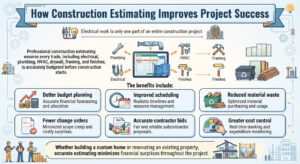
Electrical work is only one part of an entire construction project.
Professional construction estimating ensures every trade, including electrical, plumbing, HVAC, drywall, framing, and finishes, is accurately budgeted before construction starts.
The benefits include:
Whether building a custom home or renovating an existing property, accurate estimating minimizes financial surprises throughout the project.
Preparing an accurate electrical estimate requires technical expertise, industry knowledge, and advanced estimating software.
At Constructem Canada, experienced estimators deliver detailed and reliable electrical estimating services for residential, commercial, and industrial projects across Canada.
Our services include:
Electrical quantity takeoffs, material calculations
Using industry-leading estimating software, our team helps contractors prepare competitive bids while reducing costly estimating errors.
Whether you’re a homeowner, general contractor, subcontractor, or developer, Constructem Canada provides dependable estimating solutions that support informed decision-making from planning through project completion.
Many factors can influence the price of electrical work, including the size of the house, labor costs in the area, whether the equipment license serves its purpose, the kind of smart technology purchased, as well as if the job consists in new installation or putting in new wires into an old structure. With numerous households being fitted with smart devices, electric cars, charging stations, and energy-saving equipment nowadays, electrical design becomes of utmost importance.
Timely and precise costing in construction may assist the project manager in managing the process more efficiently by allowing him/her to forecast the funding, allocate the minimum risks, and reduce the chances of unexpected expenditure related to the construction.
How long does it take to rewire a house?
The timeline depends on the home’s size, age, and complexity. Most residential rewiring projects take 3 to 10 days, while larger or older homes may require additional time.
Can I live in the house during the rewiring process?
In some cases, yes. However, if the rewiring is extensive or requires the power to be disconnected for long periods, temporary relocation may be safer and more convenient.
Can I DIY my house wiring?
Electrical work should always be completed by qualified professionals. Improper wiring can create serious safety hazards, fail inspections, and violate the Canadian Electrical Code.
What is the cost difference between wiring a new construction vs. an old house?
New structure wiring is typically easier since linemen can install wiring before walls are over. Resuming an older home often costs more due to obliteration, replacement of outdated systems, and raising electrical boards to meet current code requirements.

days day
hours hour
minutes minute
seconds second
Lock in UP TO 30% off before your quote reservation expires.
Precision material takeoffs & cost estimates delivered fast for Canadian Contractors.