

Do you have plans to paint your house? Whether you’re remodeling your interiors or refreshing your exteriors, painting is one of the best ways to enhance your home and add value to it. But it’s not just the paint charge – many homeowners fail to realize how complicated house painting cost estimation. What appears to be a up-front task can quickly get out of hand if you fail to consider critical components.
In Canada, the cost of painting is determined by more than just the cost of paint and the size of the room. Weather, availability of labor, surface preparation, and even time of year have significant impact on cost and quality of final results. In this blog we will discuss all these factors enable the average homeowner to accurately estimate the cost of construction for their own home and help eliminate surprises.
Below are five surprising factors that affect house painting cost estimation in Canada—and why they matter.
The costs of repainting a house in Canada are heavily influenced by the country’s varied and often harsh climate. Unlike regions with year-round mild weather, Canadian painters must work within strict environmental constraints, adapting to cold, heat, rain, and humidity. At Constructem, we understand these challenges and provide guidance to help homeowners plan projects efficiently while controlling costs.
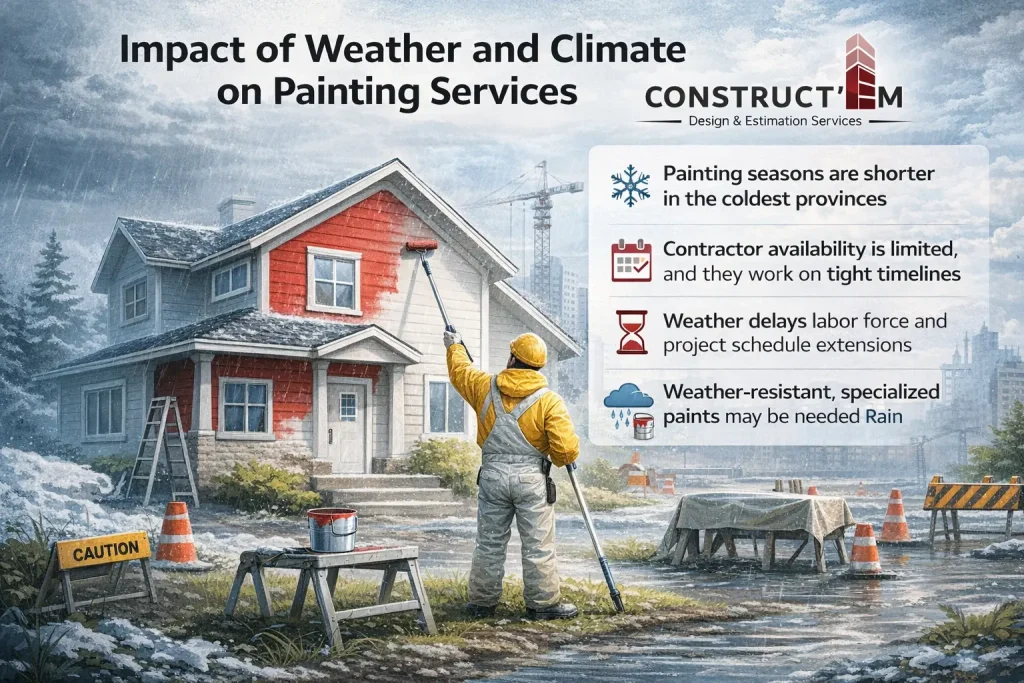
• Painting seasons are shorter in the coldest provinces
• Contractor availability is limited, and they work on tight timelines
• Weather delays labor force and project schedule extensions
• Weather-resistant, specialized paints may be needed Rain
Not taking into account climate conditions could result in low works or finishes. You might have to pay a little more to purchase paints that are suitable for your weather conditions and to employ people who know what they’re doing, but these expenses will be more than compensated for by the durability of your investment and the fact you’re not reroofing or repainting your house anytime soon.
Two homes the same size can have wildly different painting prices depending on design and accessibility. Architectural complexity is a significant, yet not widely understood/accommodated factor in house painting cost calculations.
Design cost drivers
Certain features add a substantial amount of labor time and equipment for work, such as:
• Two-story and up exteriors
• High ceilings in stairwells
• Vaulted or Cathedral ceilings
• Ornamental trims and crown molding
• Texturized walls or special finishes
• Restricted exterior access or narrow passageways
Homes featuring new age designs, or classical/heritage older build homes, often require the use of support, lifts, or special equipment. These additions increase labor and equipment costs. Intricate buildings require talented painters who are extremely precise in their work and can safely perform such tasks. Cutting corners to save money here will only result in substandard workmanship and unsafe conditions, which you may be forced to spend even more money to fix in the future.
The sounding factor is yet another of the unseen factors when estimating house painting cost. Painting is more than just choosing a new color — it’s about getting the surface ready so it can be painted. The importance of Surface Preparation When the surfaces are damaged, dirty or uneven the painters have to spend more time prior to painting. What Steps are Involved in Construction Cost Estimating Services? and House Painting Cost Estimation.
The following Things are include:
• Scraping peeling or flaking paint from surfaces
• Sanding rough or uneven surfaces
• Filling cracks, nail holes or repairing damaged drywall
• Treating mold, mildew or water damage
• Cleaning grease, dust, and soil or old paint
Older houses many times need a lot of prep work because of old materials or layers of old paint.
Labor is one of the largest components of any house painting cost estimation, and it varies significantly across Canada.
Labor pricing is determined by several factors, such as:
• Skill and experience of the painter
• Local wage rates
• Insurance and bonding requirements, license requirements
• Safety training and regulatory compliance
• Project priorities and deadlines
While experienced professionals may cost more upfront, they deliver a superior finish, accurate color matching, and long-lasting results. Projects with last-minute timelines or urgent deadlines often carry premium rates. Conversely, opting for the cheapest labor can lead to uneven application, overspray, or premature peeling.
At Constructem, our professional estimators provide expert guidance to help you choose the right labor for your project. Their advice ensures your painting work is done efficiently, meets high-quality standards, and maximizes the lifespan of your investment.
The timing of your painting project has a surprisingly strong influence on overall cost—yet many homeowners overlook this factor during construction estimation.
Painting demand changes throughout the year:
Weather-related delays can extend labor hours and increase costs, especially for exterior work. Contractors may also charge more during peak seasons due to limited availability.
Strategic scheduling can significantly reduce your home construction estimate without sacrificing quality.
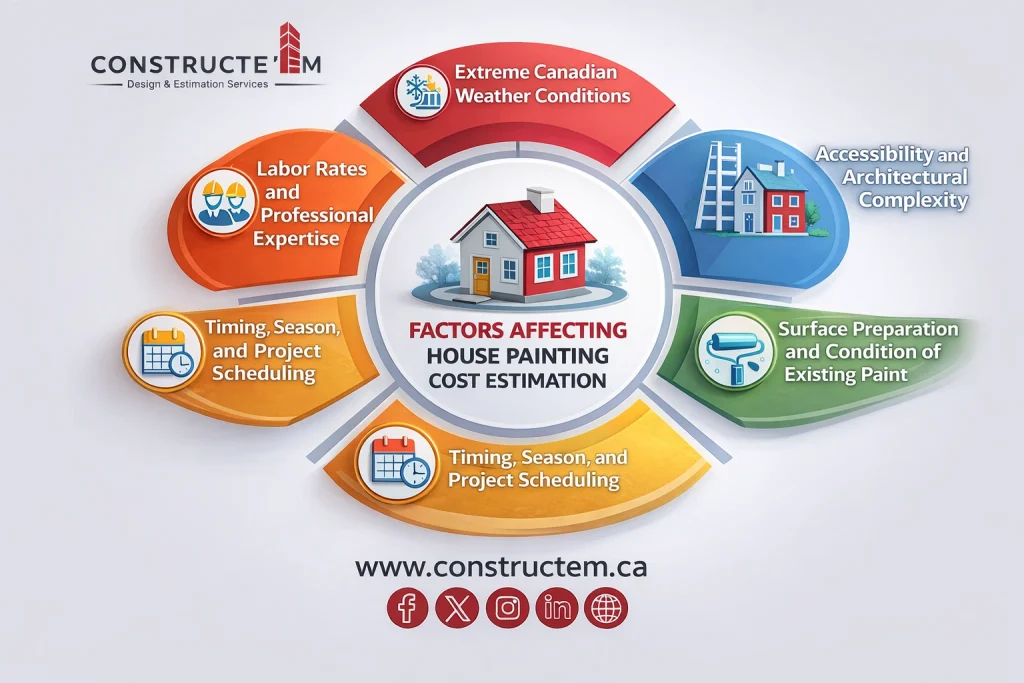
House painting cost estimation is far more complex than most homeowners realize. Factors such as extreme weather, architectural complexity, surface condition, labor expertise, and project timing all play a crucial role in determining the final price.
By understanding these surprising variables, you can create a more accurate home construction estimate, plan your budget effectively, and avoid unexpected expenses. Proper estimation not only protects your finances but also ensures your home receives professional-quality craftsmanship that lasts for years.
Investing time in careful planning and hiring the right professionals leads to better results, improved durability, and greater peace of mind.
Estimate painting costs by calculating the total paintable area and multiplying it by the per-square-foot rate. Add costs for labor, materials, surface preparation, and repairs. Location, paint quality, and project complexity significantly influence the final estimate.
In 2026, painting a 2,000 sq ft house typically costs USD $5,000–$10,000 in the USA and CAD $6,000–$12,000 in Canada, depending on labor rates, surface condition, and finishes.
Painters calculate costs based on labor hours, paint and material expenses, preparation work, and job complexity. Factors such as ceiling height, accessibility, and surface damage increase pricing.
Interior painting in 2026 averages USD $2.50–$5.00 per sq ft in the USA and CAD $3.00–$6.00 per sq ft in Canada, varying by region, paint quality, and preparation requirements.

days day
hours hour
minutes minute
seconds second
Lock in Flat 30% off before your quote reservation expires.
Precision material takeoffs & cost estimates delivered fast for Canadian Contractors.