

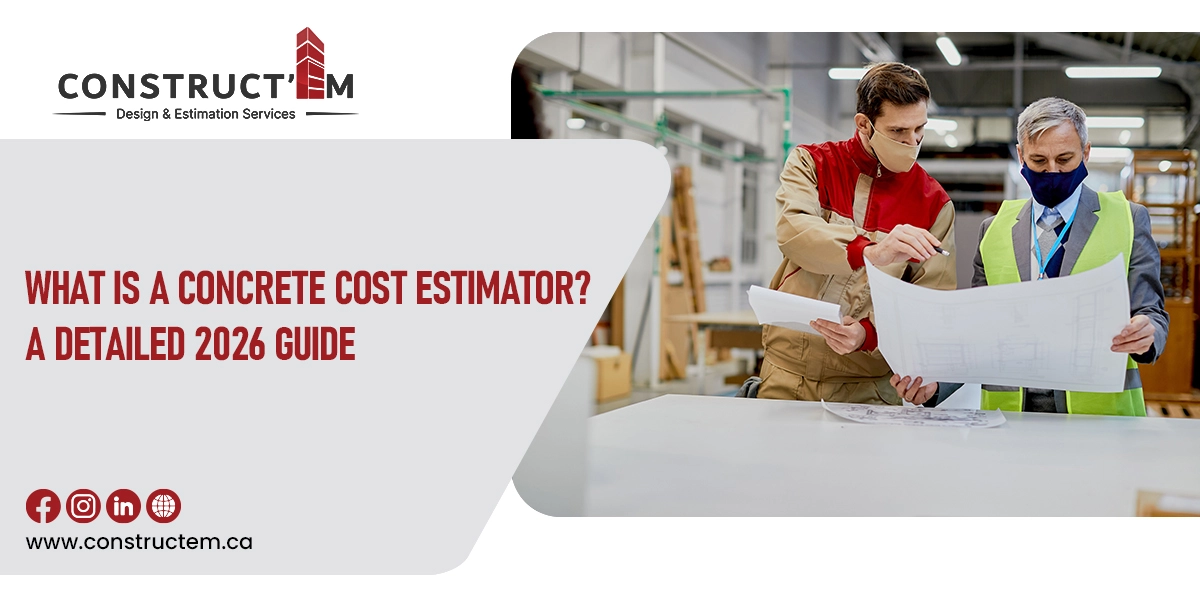
In 2026, construction estimation has become more complex, data-driven, tightly budgeting and tightly controlled than ever before. Rising material costs, ongoing labor shortages, and stricter regulations have made accurate cost estimation essential for project success. This is where a concrete cost estimator plays a critical role.
Furthermore, a concrete cost estimator is a professional responsible for evaluating the total cost of all concrete-related work in a construction project. From foundations and slabs to structural frameworks, they ensure that every component is carefully measured and accurately priced.
In today’s competitive market, even a minor miscalculation can lead to significant financial losses. Therefore, concrete estimating is no longer optional; it is a necessity.
The Growing Importance of Concrete Estimating in 2026
The construction industry is evolving rapidly. Material prices fluctuate frequently, and project requirements continue to grow in complexity. Since concrete is one of the most widely used materials in construction, even small changes in the cost of cement or aggregates can significantly impact the overall budget.
At the same time, modern projects demand precision. Whether it is high-rise buildings or customized commercial spaces, success depends on accurate planning and detailed cost analysis. Relying on rough estimates is no longer practical, as even small errors can result in serious financial setbacks.
What Does a Concrete Cost Estimator Do?
A concrete cost estimator analyzes all aspects of concrete work to determine the total project cost with accuracy and efficiency. Their responsibilities extend beyond simple calculations and include planning, budgeting, and risk assessment.
They calculate the required quantities of materials such as cement, sand, aggregates, and reinforcement. They also estimate labor requirements for both skilled and unskilled workers, ensuring that workforce costs are properly accounted for.
In addition, they evaluate equipment expenses, including mixers, pumps, and formwork systems. Site conditions such as slope, accessibility, and environmental factors are also carefully analyzed, as these elements can significantly influence overall costs.
Why Accurate Concrete Estimation Matters
In 2026, construction profit margins are tighter than ever, leaving little room for error. Accurate concrete estimation is essential for maintaining financial control and ensuring project success.
It helps prevent cost overruns by keeping budgets aligned with actual project requirements. It also enables contractors to submit competitive and realistic bids without underestimating costs.
Furthermore, precise estimation reduces risks by identifying potential issues early in the planning phase.This minimizes unexpected expenses and disruptions during construction. It also ensures timely procurement of materials, preventing delays and keeping the project on schedule.
The Rising Complexity of Concrete Work in Modern Construction
Concrete work has evolved significantly and now involves more than just basic slabs and foundations. Modern construction requires advanced techniques and specialized materials.
High-performance concrete is commonly used for enhanced strength and durability in large-scale projects. Additionally, there is a growing shift toward sustainable construction, with green concrete solutions incorporating recycled materials to reduce environmental impact.
Another emerging innovation is smart concrete, which integrates sensors to monitor structural performance over time. These advancements require estimators to have a deep understanding of modern materials, technologies, and construction methods in order to produce accurate and reliable estimates.
How Small Estimation Errors Lead to Big Losses
One of the biggest challenges in concrete estimating is that even small errors can quickly escalate into major financial issues. These mistakes may appear insignificant during the planning phase but can have serious consequences later.
Common errors include incorrect quantity calculations, failure to account for material waste, underestimating labor productivity, overlooking transportation costs, and ignoring site preparation requirements.
For example, a 5% miscalculation in concrete volume on a large-scale project can result in losses amounting to thousands or even millions of dollars. This highlights the importance of precision and attention to detail throughout the estimation process.
Industry Regulations and Compliance in 2026
Concrete estimation must comply with modern building codes and regulatory standards. Meeting these requirements is essential to avoid legal complications, project delays, and additional costs.
Estimators must consider structural safety regulations, environmental guidelines, material quality standards, and local permit requirements. Failure to account for these factors can result in penalties, rework, and damage to a company’s reputation.
Read Also: Surprising Accuracy of Digital Steel Estimating Services
Common Challenges in Concrete Cost Estimating
Despite the use of advanced software and tools, concrete cost estimator continue to face several challenges. Material prices remain unpredictable, making accurate forecasting difficult.
Labor shortages also persist, increasing demand for skilled workers and driving up labor costs. In addition, project complexity continues to grow, particularly with customized designs that require detailed analysis.
Supply chain disruptions can further complicate the process by delaying material availability and impacting project timelines. Successfully managing these challenges requires experience, up-to-date market knowledge, and access to reliable data.
Conclusion
In 2026, a concrete cost estimator plays a crucial role in a project’s success and is much more than just a mathematician. Accurate estimating is crucial for preserving profitability and minimizing risks in light of growing expenses, intricate designs, and stringent regulations. Concrete estimators assist contractors with confident planning by using contemporary tools, comprehending market trends, and paying close attention to every aspect. Saving money is not the only reason to invest in precise concrete estimation. It’s about laying a solid basis for sustained success in a cutthroat sector.
FAQs
What is a concrete cost estimator?
A concrete cost estimator is a professional who calculates the total cost of concrete work, including materials, labor, and equipment.
How accurate are concrete estimates in 2026?
With modern tools and real-time data, estimates are typically accurate within a 2–5% margin, depending on the project.
Can software replace concrete estimators?
Software improves speed and accuracy, but human expertise is still necessary to evaluate risks and site conditions.
How do estimators prevent cost overruns?
They identify potential risks early, include contingency budgets, and ensure all cost factors are properly calculated.
What is the difference between rough and detailed estimates?
A rough estimate provides a basic cost idea, while a detailed construction estimate includes a complete breakdown of all expenses for accurate budgeting.
